
cabinet buying guide
RTA Cabinets vs. Custom Cabinets: 7 Key Differences
Compare RTA and custom cabinets by cost, quality, lead time, sizing, and installation to choose the right cabinets for your kitchen remodel.
Choosing between ready-to-assemble and custom cabinets is not simply a choice between "cheap" and "high-end." The better option depends on your room, budget, schedule, design priorities, and how much installation work you want to manage.
For many kitchens, quality RTA cabinets provide the construction features homeowners care about while leaving more of the remodeling budget available for countertops, appliances, and installation. Custom cabinetry earns its premium when unusual dimensions, specialized storage, or a one-of-a-kind finish genuinely matters.
This guide compares RTA cabinets vs. custom cabinets point by point so you can spend where it improves your kitchen instead of paying for features you may not need.
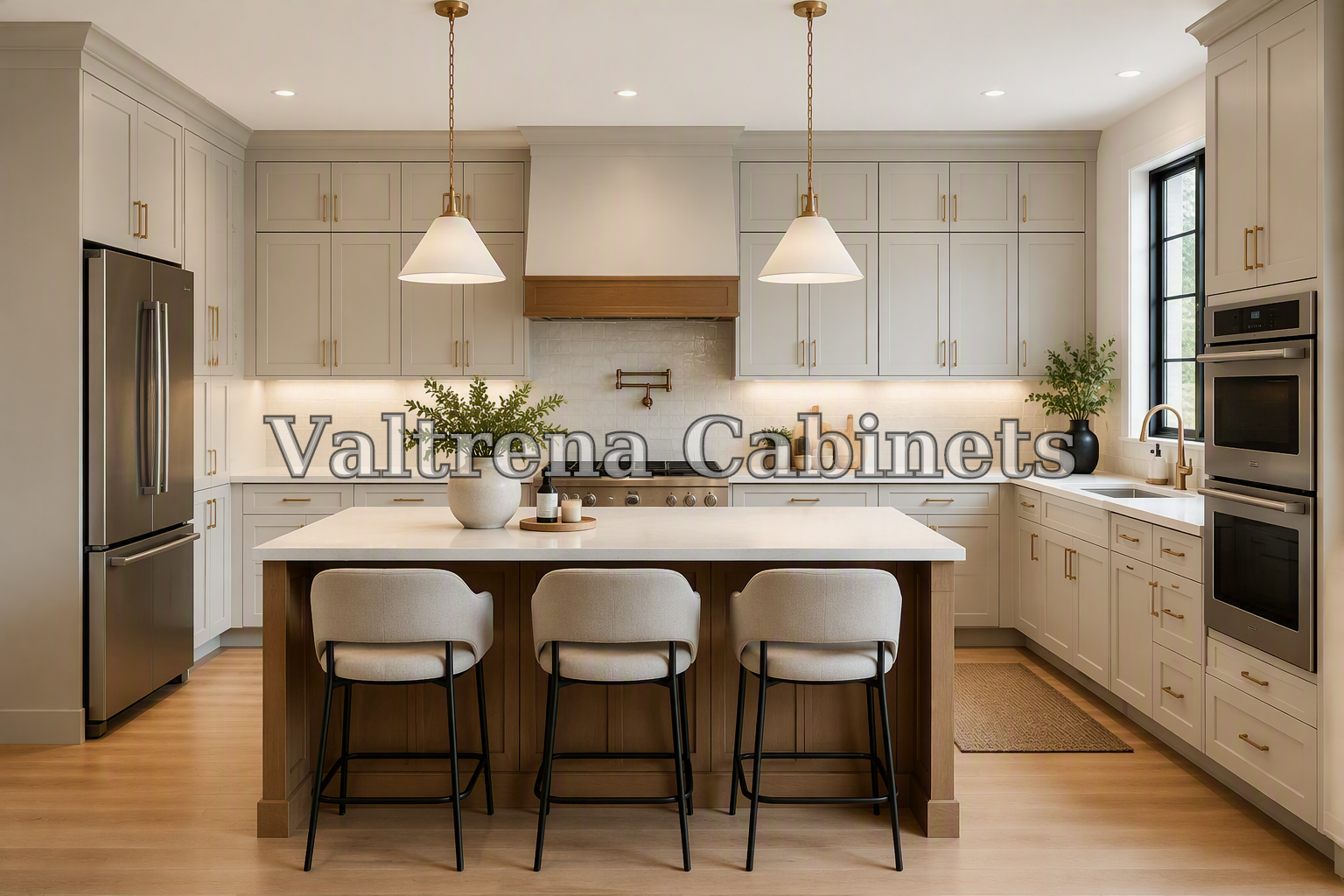
First, Understand What RTA and Custom Actually Mean
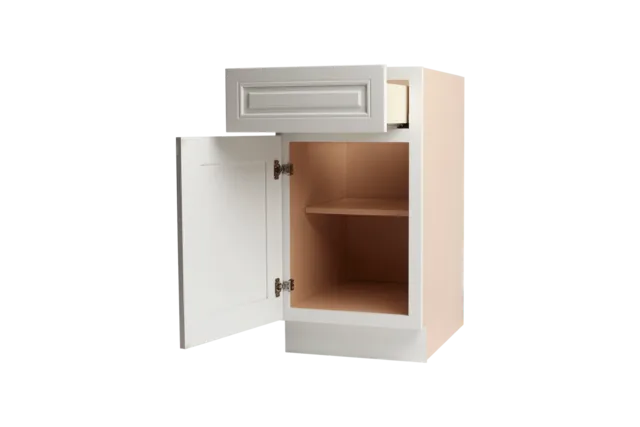
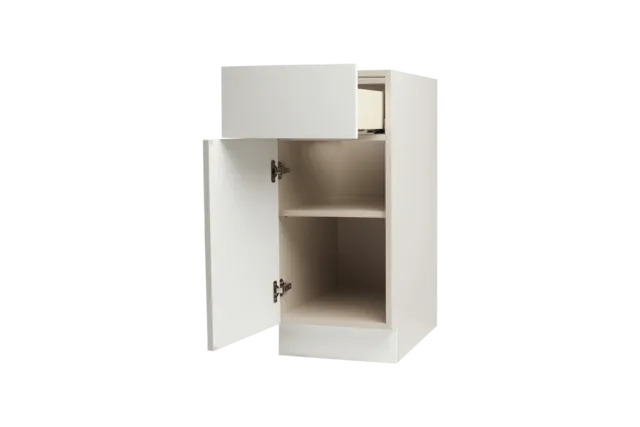
RTA describes how a cabinet is delivered: the cabinet arrives flat-packed and is assembled before installation. It does not define one material, door style, or quality level. RTA cabinet lines can range from entry-level boxes to cabinets with plywood construction, dovetail drawers, and soft-close hardware.
Custom describes how a cabinet is designed and manufactured. A custom cabinet shop can build to a project's specific dimensions, materials, finish, and storage requirements. The cabinets may arrive assembled, but that delivery method is separate from the custom design itself.
You may also see the term stock cabinets. Stock means the manufacturer offers a set catalog of sizes and styles. Many RTA cabinets are stock cabinets, but the two terms are not interchangeable: "stock" describes the product range, while "RTA" describes delivery and assembly.
The useful comparison is not a label against a label. Compare the actual box material, joinery, hardware, finish, available sizes, warranty, and total installed cost of each cabinet line.
RTA vs. Custom Cabinets at a Glance
| Factor | RTA cabinets | Custom cabinets |
|---|---|---|
| Upfront cost | Generally lower because sizes and components are standardized | Generally higher because each project requires design and fabrication labor |
| Lead time | Often shorter when the selected line is in stock | Usually longer and dependent on the shop's production schedule |
| Sizing | Fixed increments, commonly with fillers and trim for a finished fit | Can be built to nonstandard widths, heights, and depths |
| Style choices | Limited to the manufacturer's catalog | Broad control over door profile, wood, color, sheen, and details |
| Assembly | Required before installation | Typically completed by the cabinet shop |
| Best fit | Standard layouts, value-focused remodels, and predictable schedules | Unusual rooms, exact-fit designs, and highly personalized projects |
1. Cost: Compare the Whole Project, Not Just the Cabinet Price
RTA cabinets usually cost less because manufacturers repeat the same sizes, door styles, and production steps. Flat packaging can also reduce storage and transportation costs. Those efficiencies do not automatically mean weak construction; they mean less of the price is tied to one-off fabrication.
Custom cabinet pricing includes design time, shop drawings, material sourcing, finishing, fabrication, and often delivery or installation coordination. That premium can be worthwhile when the work solves a real constraint. A cabinet built to an exact width may eliminate an awkward gap, and a custom pantry may use a difficult corner better than catalog sizes can.
When comparing estimates, put these items on the same worksheet:
- Cabinet boxes, doors, drawer fronts, finished sides, fillers, and trim
- Freight, delivery, or local pickup charges
- Assembly labor for RTA cabinets
- Installation, leveling, scribing, and wall preparation
- Hardware upgrades and decorative accessories
- Sales tax and a reasonable contingency for field adjustments
A low cabinet quote can become expensive after missing panels and trim are added. A detailed quote is more useful than a dramatic discount percentage. For a project-specific comparison, submit your measurements through our free cabinet quote tool.
2. Quality: Construction Specifications Matter More Than Category
Neither RTA nor custom guarantees quality. A well-specified RTA cabinet can outperform a poorly built custom box, while a skilled custom shop can produce construction and finishing beyond what a standardized line offers.
Evaluate both options using the same checklist:
- Cabinet box: Confirm the material and thickness of the sides, back, shelves, and hanging rails.
- Drawer construction: Look for durable joinery, a solid bottom, and a suitable weight rating.
- Slides: Full-extension undermount slides improve access and are easier to clean around.
- Hinges: Adjustable soft-close hinges make alignment and everyday use easier.
- Finish: Ask how doors and exposed ends are prepared, coated, and cured.
- Warranty: Read what is covered, what is excluded, and how replacement parts are handled.
Do not rely on a single phrase such as "all wood." Ask which parts are solid wood, plywood, MDF, or engineered wood and why each material is used. MDF, for example, can provide a smooth and stable center panel for a painted door even when plywood is preferred for a structural cabinet box.
Before ordering an entire kitchen, view the specifications for our framed RTA cabinet lines and use a sample door to judge the color and finish in your own lighting.
3. Lead Time: In-Stock Speed vs. Made-to-Order Control
RTA cabinets are often the practical choice when a remodel has a firm deadline. In-stock components can move into fulfillment without waiting for a complete production cycle. However, inventory status still matters. One backordered pantry or finished panel can delay an otherwise complete kitchen, so confirm availability for the entire order.
Custom cabinets are made after dimensions, drawings, and finishes are approved. The schedule may include design revisions, material procurement, fabrication, finishing, curing, and installation. That process takes longer, but it also creates room for decisions that are impossible in a fixed catalog.
Ask every supplier for the same three dates: when the order becomes non-changeable, when all pieces are expected to ship, and how quickly a damaged or missing component can be replaced.
4. Fit and Sizing: Standard Dimensions Work in More Kitchens Than You Think
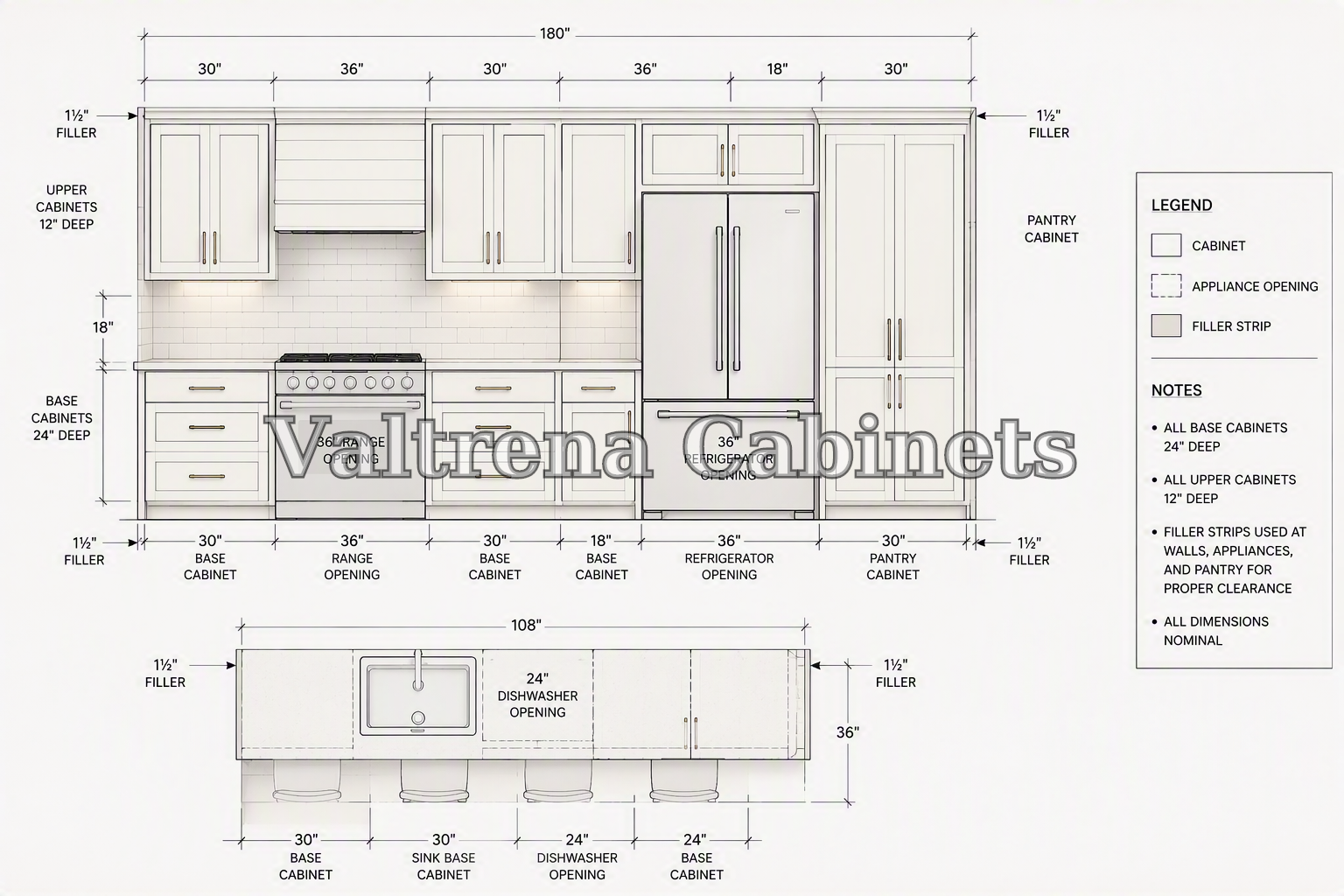
RTA cabinet widths commonly increase in fixed increments. Fillers, end panels, toe kicks, crown molding, and scribe molding bridge the remaining space and create a finished installation. In a reasonably square kitchen, an experienced designer can build an efficient layout from standard sizes without the room looking generic.
Custom cabinetry becomes more valuable when a room includes:
- Sloped ceilings or sharply out-of-plumb walls
- Unusual appliance dimensions
- Shallow or extra-deep cabinet requirements
- A wall where every inch must be used
- Architectural details that must align precisely
- Accessibility requirements outside standard cabinet dimensions
Accurate measurements are essential for either route. Record wall lengths at several heights, locate utilities, pull the specifications for each appliance, and reserve appropriate filler space before finalizing the order.
5. Design Flexibility: Curated Choices vs. Near-Total Control
RTA lines simplify decisions. You choose from a defined group of door styles, colors, cabinet sizes, and accessories. That limitation can help a remodel move forward and makes it easier to see how the finished kitchen will look before ordering.
Custom cabinets offer far more control. A shop may match an existing finish, alter rail and stile proportions, build furniture-style pieces, integrate specialty storage, or create cabinetry that follows unusual architecture. The tradeoff is that every additional decision requires design time and may affect cost or schedule.
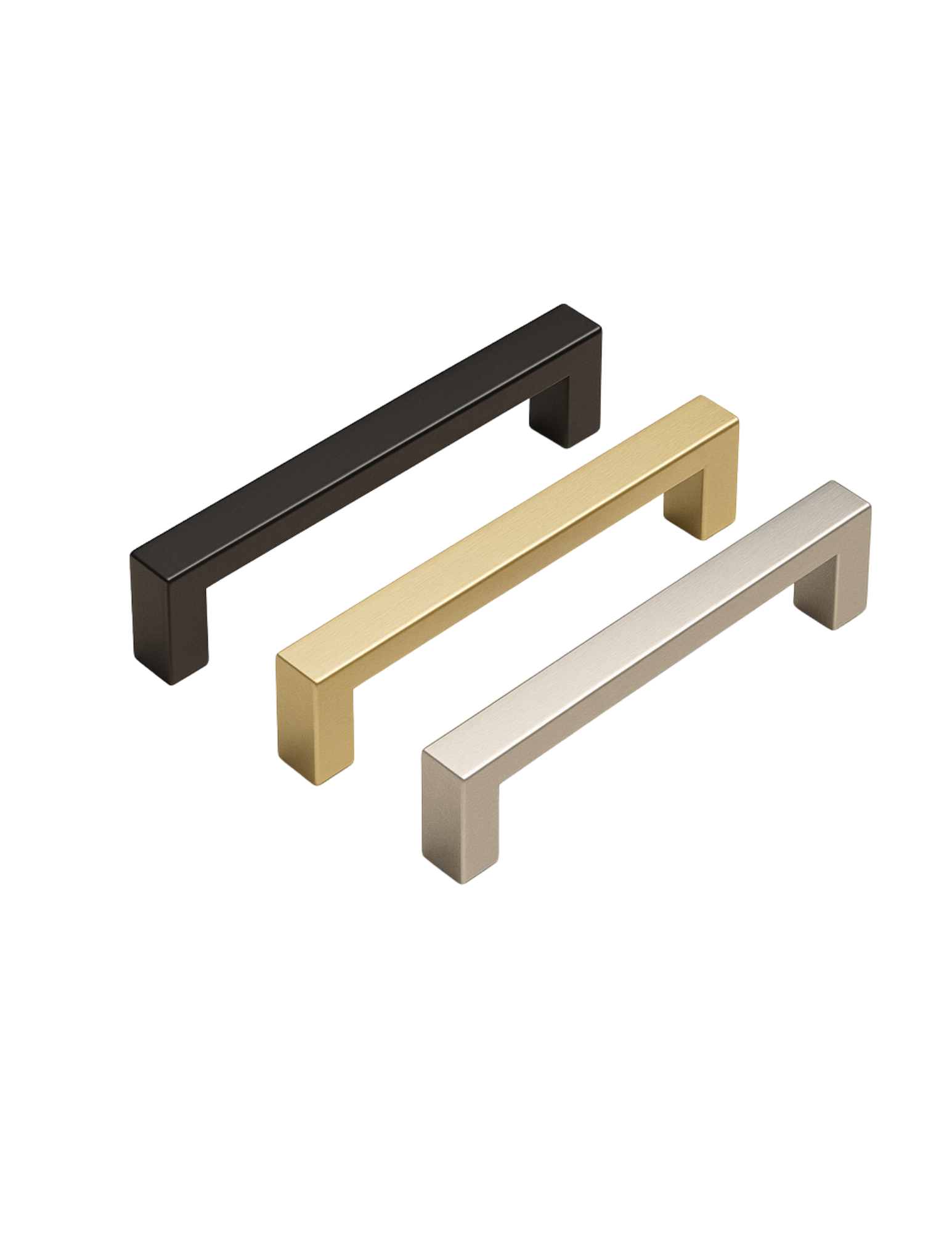
You can personalize a standardized cabinet plan without making every box custom. Decorative panels, crown molding, open shelving, lighting, countertops, and well-chosen cabinet handles can give an RTA kitchen a more tailored result.
6. Assembly and Installation: Separate These Two Jobs
Assembly turns flat-packed parts into a square cabinet box. Installation fastens those boxes to the home, levels the run, joins neighboring cabinets, and fits trim to the room. A homeowner may be comfortable assembling cabinets on a protected work surface while hiring a professional for installation.
That hybrid approach can preserve part of the RTA cost advantage without risking a visibly uneven cabinet run. If you plan to do both jobs yourself, account for tool setup, workspace, unpacking, hardware organization, wall conditions, and the learning curve of the first few boxes.
Custom cabinets commonly arrive assembled and may be installed by the cabinetmaker or a partner crew. Confirm whether installation is included in the proposal and who is responsible for site measurements. Responsibility should be written down before fabrication begins.
7. Repairs and Future Changes
A standardized cabinet line may make it easier to order a replacement door or drawer front, provided the style remains active. Custom shops may be able to reproduce a damaged component or match a finish, but availability depends on the shop, materials, and retained project records.
For either choice, keep the order confirmation, door style, finish name, touch-up information, and product photos. Review the supplier's cabinet warranty before purchase rather than after a problem appears.
When RTA Cabinets Are Usually the Better Choice
Choose RTA when most of these are true:
- Your kitchen works well with standard cabinet dimensions.
- You want to direct more budget toward countertops, appliances, or labor.
- You are comfortable assembling cabinets or can price that labor separately.
- You prefer a shorter, inventory-based ordering process.
- You found a cabinet line whose construction, finish, and warranty meet your standards.
When Custom Cabinets Are Worth the Investment
Choose custom when most of these are true:
- The room has unusual dimensions that standard sizes cannot use efficiently.
- You need specialized storage or accessibility features.
- An exact wood species, finish, door profile, or architectural match is essential.
- You value a single design-and-fabrication relationship more than the lowest cost.
- Your schedule can accommodate design approvals and made-to-order production.
Can You Mix RTA and Custom Cabinets?
Yes, but the mix should be intentional. One practical approach is to use RTA cabinets for the main wall and base runs, then commission a custom hood surround, island, shallow pantry, or awkward transition piece. This directs custom labor toward the area where it has the greatest visual or functional impact.
Matching finishes from different manufacturers is difficult. A coordinated contrast is often more successful than an almost-match. For example, pair a painted perimeter with a clearly different wood island instead of asking two suppliers to produce whites that may shift under kitchen lighting.
Questions to Ask Before You Sign an Order
- What materials are used for the box, shelves, doors, drawer boxes, and backs?
- Which parts of this quote are required to complete the design but priced separately?
- Are all components currently available, and what happens if one is backordered?
- Who verifies final measurements and appliance specifications?
- What assembly and installation work is included?
- How are freight damage, missing pieces, and finish defects reported?
- How long are replacement parts expected to remain available?
- What changes are allowed after the deposit or order approval?
The Bottom Line
RTA cabinets make the most sense when standard sizes fit the room and you want strong value, a predictable selection process, and control over assembly costs. Custom cabinets make the most sense when exact dimensions or truly personalized design will materially improve the kitchen.
Start with the room rather than the category. Measure carefully, define the features you will notice every day, and compare complete installed costs using the same specifications. That process usually makes the right choice clear.
Compare your options with a real layout
Browse our RTA kitchen cabinet collections, then send your measurements through the free cabinet quote tool. A line-by-line plan gives you a useful number to compare with a local custom proposal.